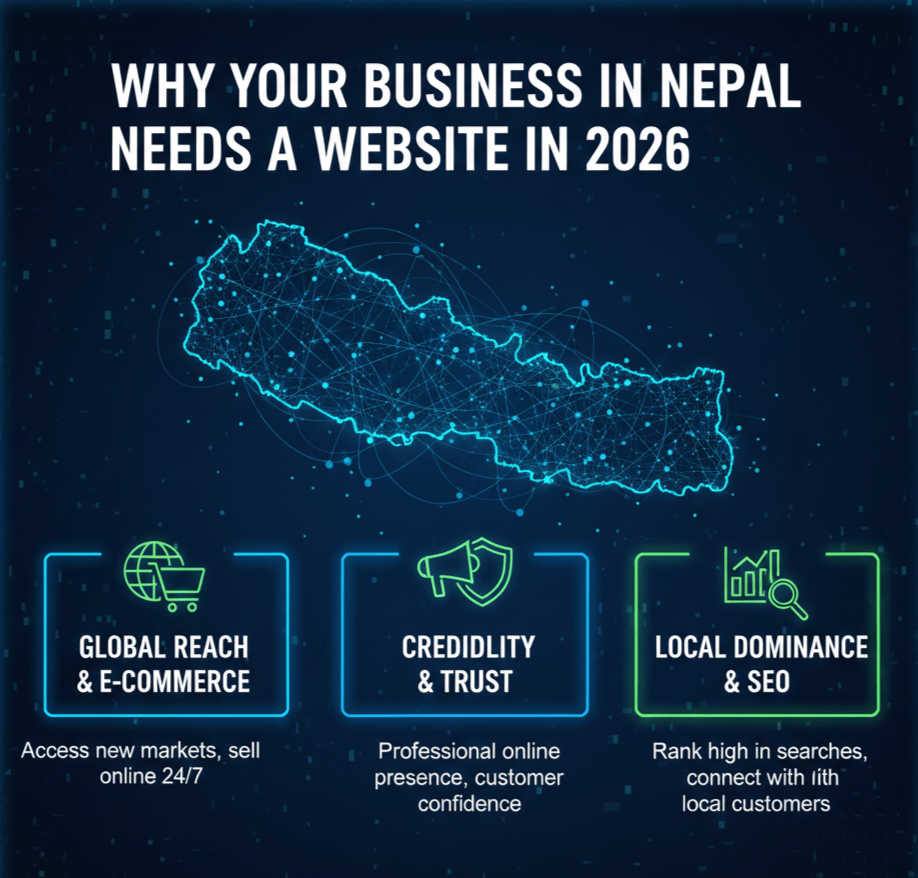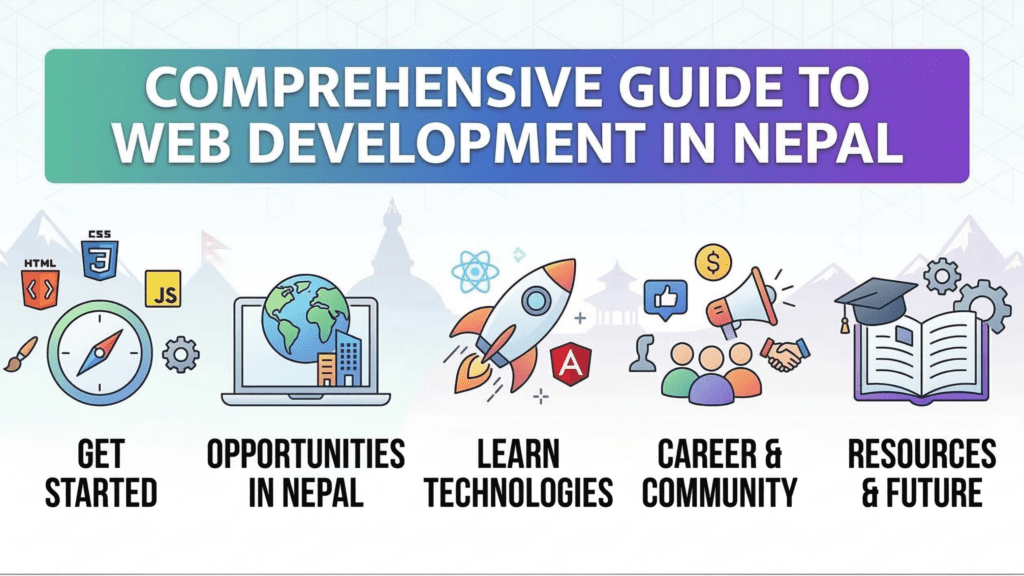
Nepal’s digital transformation is accelerating at an unprecedented pace. In 2025, more than 6.5 million Nepalis shopped online, marking a 38% increase from the previous year. The country’s start-up ecosystem is thriving, with over 1,300 new tech-based ventures registered nationwide. From local handicraft sellers in Bhaktapur to eco-tourism start-up’s in Pokhara, businesses are embracing digital platforms to reach customers. This surge in online activity has made web development in Nepal one of the most sought-after services in 2026. A well-designed website is now a vital tool for growth, visibility, and credibility in Nepal’s evolving digital economy.
What Is Web Development?

Web development is the process of creating and maintaining websites and web applications. It includes both the visual design (frontend) and the technical structure (backend). A well-developed website helps businesses connect with customers, build trust, and grow revenue.
In Nepal, web development services range from simple portfolio sites to advanced e-commerce platforms, with local agencies delivering affordable, high-quality solutions. Code in Nepal stands out by offering professional web development services tailored to Nepali businesses, building everything from modern portfolio websites to secure and scalable e-commerce platforms that support real business growth.
Web Development in Nepal: Why It Matters for Businesses in 2026

Nepal’s internet penetration has surpassed 70%, and mobile internet usage continues to grow rapidly. With more people shopping, learning, and communicating online, businesses that invest in a strong digital presence gain a clear advantage. A professional website helps:
- Build brand trust and visibility.
- Reach customers across Nepal and abroad.
- Improve engagement through online booking, chat, and payment systems.
- Increase sales and leads through SEO and digital marketing.
From small-town entrepreneurs to large corporations, every business in Nepal now needs a website to stay competitive.
Types of Websites in Nepal

Different industries in Nepal require different types of websites. Here are the most common ones:
1. Static Websites
Ideal for small businesses or personal portfolios. For example, a local trekking guide in Lukla might use a static website to display services and contact details. These are affordable and quick to build.
2. Dynamic Websites
Used by news portals, NGOs, and educational institutions. They allow easy content updates without coding. Popular examples include online news sites like OnlineKhabar and Setopati.
3. E-commerce Websites
E-commerce is growing rapidly in Nepal, with platforms like Daraz and SastoDeal leading the way. Local stores are also launching their own online shops using WooCommerce or Shopify.
4. Corporate Websites
Companies in Kathmandu and Lalitpur use corporate websites to showcase services, teams, and achievements. These sites help attract clients and investors.
5. Portfolio Websites
Freelancers, photographers, and designers use portfolio websites to display their work. With the rise of freelance culture in Nepal, these sites are becoming more common.
6. Educational Websites
Schools and colleges are adopting online learning platforms. Many institutions now use websites for admissions, course management, and virtual classes.
7. Government and NGO Websites
Government offices and NGOs are digitizing services. For example, the Department of Transport Management and Nepal Tourism Board have launched user-friendly websites for public access.
Technologies Used in Web Development in Nepal
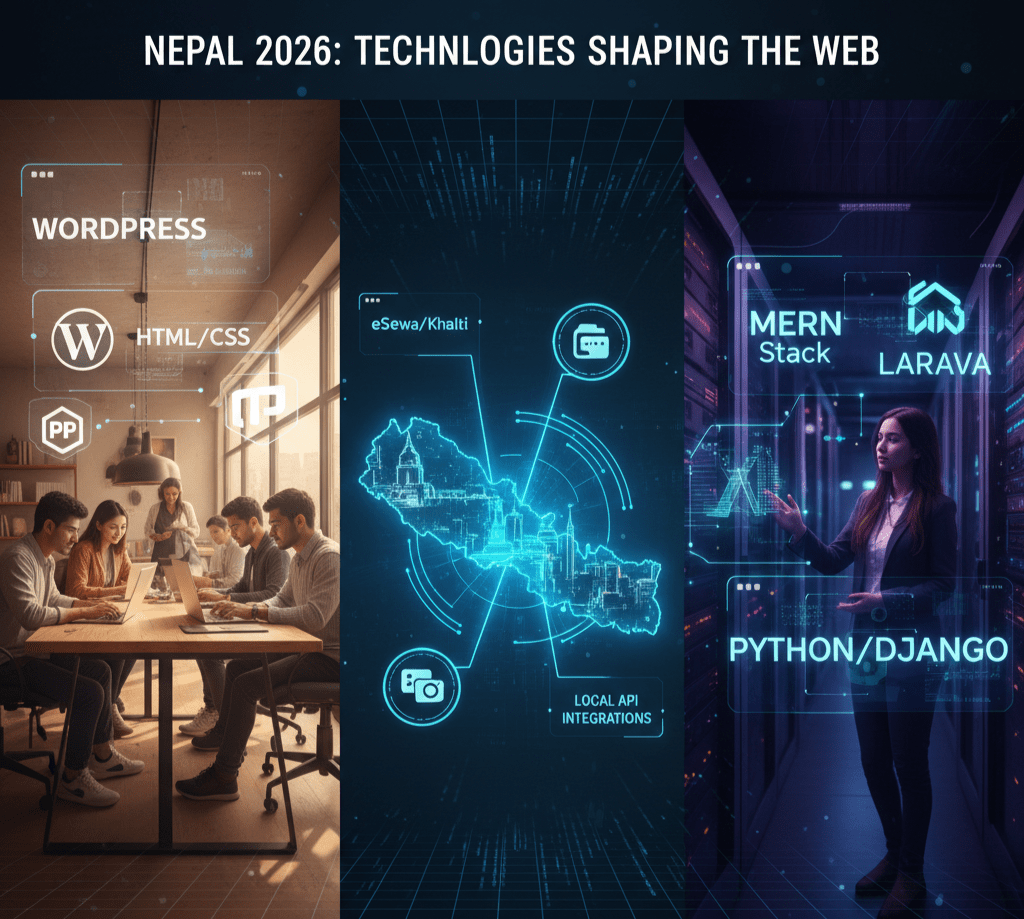
Nepali developers use modern tools and frameworks to build responsive, secure, and scalable websites.
Frontend Technologies
- HTML5, CSS3, and JavaScript for structure and interactivity
- React.js, Vue.js, and Angular for dynamic interfaces
Backend Technologies
- PHP (Laravel, CodeIgniter) — widely used in Nepal
- Node.js for real-time applications
- Python (Django, Flask) for data-driven projects
Databases
- MySQL, PostgreSQL, and MongoDB
CMS Platforms
- WordPress (used by over 70% of Nepali websites)
- Drupal and Joomla for larger organizations
E-commerce Platforms
- WooCommerce, Shopify, and Magento
Hosting and Deployment
- Local hosting providers like Prabhu Host and Web Host Nepal
- Cloud hosting via AWS, Google Cloud, or DigitalOcean
Website Development Cost in Nepal
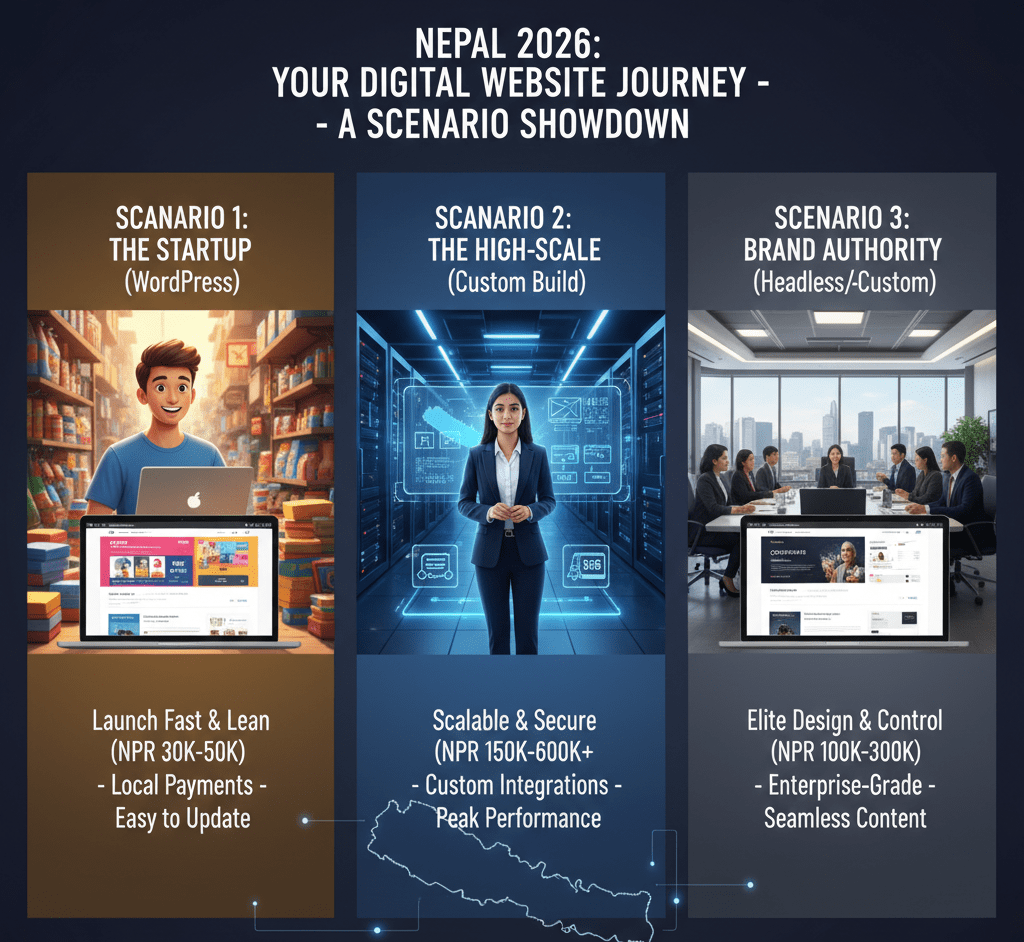
The cost of website development in Nepal varies depending on design, features, and location. Developers in Kathmandu generally charge more than those outside the valley.
| Type of Website | Estimated Cost (NPR) | Development Time |
| Basic Static Website | 15,000 – 30,000 | 1 – 2 weeks |
| Dynamic Website | 30,000 – 70,000 | 2 – 4 weeks |
| E-commerce Website | 60,000 – 150,000 | 4 – 8 weeks |
| Corporate Website | 50,000 – 120,000 | 3 – 6 weeks |
| Custom Web Application | 100,000 – 300,000+ | 2 – 4 months |
Example-Based Scenarios
- A boutique hotel in Pokhara developing a booking-enabled website with multilingual support might spend around NPR 180,000, depending on design and features.
- A handicraft exporter in Bhaktapur creating an e-commerce site with international payment integration could expect costs between NPR 120,000–200,000.
- A local cooperative in Chitwan building a member management portal might invest NPR 250,000–300,000, especially if it includes dashboards and data analytics.
Factors Affecting Cost
- Design Complexity – Custom UI/UX designs increase cost.
- Features – Booking systems, payment gateways, and dashboards add to the budget.
- Content Creation – Photography, copywriting, and SEO services.
- Hosting and Domain – Annual cost ranges from NPR 3,000 to 10,000.
- Maintenance – Regular updates cost NPR 5,000 to 20,000 per year.
Website Development Timeline in Nepal
A typical website in Nepal takes 4 to 8 weeks to complete, depending on its size, design, and features. A structured process ensures smooth collaboration between clients and developers, resulting in a high-quality, functional website.
1. Planning (1–2 weeks)
This stage defines the project’s goals, audience, and structure. For example, a travel agency in Thamel might plan for booking features and multilingual content. A clear sitemap and feature list are created to guide the project.
2. Design (1–3 weeks)
Designers craft the website’s layout, color scheme, and user interface. Mockups are shared for feedback to ensure the design aligns with the brand and user needs. For instance, an e-commerce site may focus on clean visuals and easy navigation.
3. Development (2–6 weeks)
Developers code the frontend and backend, integrating features like contact forms, payment systems, and content management tools. The duration depends on complexity — simple sites take weeks, while advanced ones may take longer.
4. Testing (1–2 weeks)
The website is tested for speed, security, and responsiveness across devices. Bugs and errors are fixed to ensure smooth performance before launch.
5. Launch (1 week)
After final approval, the website is uploaded to a live server. Domain and hosting are configured, and the site is monitored for any immediate issues.
6. Maintenance (Ongoing)
Regular updates, backups, and security checks keep the website running efficiently. Many Nepali web agencies offer maintenance packages for long-term support.
Why Hire a Professional Web Development Company in Nepal?

Hiring a professional web development company in Nepal ensures quality, reliability, and long-term support. As the digital market grows, businesses need websites that not only look great but also perform efficiently, attract customers, and stay secure. Professional developers bring the right mix of technical expertise, creativity, and strategy to make that happen.
1. Expertise and Experience
Nepali developers are now competing on a global scale. Many companies in Kathmandu, Lalitpur, and Pokhara provide web development services to clients in the US, Australia, and the Middle East. Their experience with international projects helps them deliver world-class websites that meet modern design and performance standards. They understand the latest technologies, frameworks, and trends — ensuring your website is both functional and future-ready.
2. Custom Solutions
Every business has unique goals, and professional web development companies create customized websites that reflect those needs. Whether it’s an e-commerce platform for a local clothing brand or a booking system for a hotel in Pokhara, professionals design and develop features that align with your objectives. This personalized approach ensures your website stands out and delivers measurable results.
3. Time Efficiency
Professional teams follow a structured workflow — from planning and design to testing and launch. This organized process ensures projects are completed on time without compromising quality. With dedicated designers, developers, and project managers, businesses can focus on their operations while the experts handle the technical side efficiently.
4. Technical Support
A professional web development company doesn’t stop working after the website goes live. They provide ongoing maintenance, updates, and troubleshooting to keep your site running smoothly. Whether it’s fixing bugs, updating plugins, or improving performance, having a reliable support team ensures your website stays secure and up to date.
5. SEO Optimization
A well-developed website is not just about design — it’s also about visibility. Professional developers build websites with SEO-friendly structures, optimized loading speeds, and clean coding practices. This helps your site rank higher on Google and attract more organic traffic. Many Nepali web agencies also integrate on-page SEO and analytics tools to track performance and growth.
6. Security
Security is a top priority for any online business. Professional developers use SSL certificates, secure coding practices, and regular security audits to protect user data and prevent cyber threats. This is especially important for e-commerce, banking, and government websites that handle sensitive information.
Growth of the Web Development Industry in Nepal
The web development industry in Nepal is expanding rapidly due to several key trends:
- Outsourcing Boom: Nepali developers are increasingly working with international clients. In 2025, IT outsourcing exports crossed NPR 15 billion, a 40% increase from 2023.
- Freelancer Growth: Platforms like Upwork and Fiverr have seen a surge in Nepali freelancers offering web development services.
- Government Projects: The Nepali government is investing in digital transformation, launching portals for e-governance, education, and tourism.
- Startup Ecosystem: Tech startups in Kathmandu, Lalitpur, and Pokhara are driving innovation in fintech, healthtech, and e-commerce.
Code in Nepal – a leading web development company offering affordable, high-quality websites for Nepali businesses.
Future of Web Development in Nepal

The future of web development in Nepal is vibrant and full of potential. As the nation advances toward a Digital Nepal, both government and private sectors are investing heavily in technology. This shift is creating new opportunities for developers, entrepreneurs, and businesses across the country. The growing internet penetration, improved digital literacy, and affordable tech infrastructure are setting the stage for a digital revolution.
1. E-commerce and Retail
E-commerce is one of Nepal’s fastest-growing industries, expanding by more than 30% annually. Local retailers, from grocery stores in Biratnagar to clothing brands in Kathmandu, are launching their own online stores. Developers are focusing on building secure, mobile-friendly, and multilingual e-commerce platforms that cater to both local and international customers. As digital payments become more common, the demand for integrated online shopping systems will continue to rise.
2. Tourism and Hospitality
Tourism remains a cornerstone of Nepal’s economy, and the industry is rapidly going digital. Hotels, trekking agencies, and homestays are investing in websites with real-time booking systems, virtual tours, and AI chatbots to attract global travelers. For example, eco-lodges in Mustang and adventure companies in Pokhara are using web-based systems to manage bookings and promote sustainable tourism. This digital shift supports Nepal’s goal of welcoming over 2 million tourists annually by 2027.
3. Education and E-learning
The education sector is embracing digital transformation. Schools, colleges, and training centers are adopting web-based learning management systems (LMS) for online classes, exams, and student management. Platforms like MeroSchool and Kullabs have already made online learning accessible to thousands of students. In the coming years, more institutions will invest in custom-built educational websites with video learning, progress tracking, and AI-based analytics.
4. Fintech and Banking

Nepal’s fintech industry is expanding rapidly, with digital wallets like Khalti, eSewa, and IME Pay leading the way. Banks and cooperatives are developing secure web portals for online banking, loan applications, and customer dashboards. As financial inclusion grows, web developers will be in high demand to create secure, user-friendly, and scalable fintech platforms that meet global standards.
5. Government and Public Services
The government’s Digital Nepal Framework is driving the development of e-governance platforms. Websites for tax filing, license renewals, and citizen services are improving accessibility and transparency. Projects like MeroKitta and Lok Sewa Online show how digital tools are simplifying public services. In the next few years, nearly every government department is expected to have a fully functional, interactive website.
6. Outsourcing and Remote Work
Nepal is becoming a preferred outsourcing destination for web development due to its skilled workforce and competitive pricing. In 2025, IT service exports exceeded NPR 15 billion, and this figure is expected to double by 2028. Many Nepali developers now work remotely for clients in the US, Australia, and Europe. The rise of co-working spaces and better internet connectivity is fuelling this remote work revolution, creating thousands of new opportunities for freelancers and agencies.
7. AI and Automation
Artificial Intelligence (AI) and automation are reshaping how websites are built and managed. Nepali developers are integrating AI chatbots, voice search, and data analytics into websites to enhance user experience. For instance, real estate companies are using AI-driven recommendation systems, while e-commerce sites are adopting predictive analytics to understand customer behavior. As global trends reach Nepal, the use of machine learning, blockchain, and cloud computing will become more common in web projects.
Conclusion
Web development in Nepal is evolving into a cornerstone of the country’s digital economy. From small-town entrepreneurs to large corporations, every business now recognizes the value of a strong online presence. With affordable costs, skilled developers, and a growing outsourcing market, Nepal is emerging as a regional hub for web development and IT innovation. Investing in a professional web development company ensures long-term growth, visibility, and success in 2026 and beyond.