Website vs mobile app development in Nepal hinges on budget, mobile dominance (73% broadband users), and business scale—affordable sites suit most SMEs amid slow internet and high costs for apps. As digital adoption grows in Nepal, businesses are increasingly investing in online platforms to reach customers and remain competitive. Whether it is a startup, a retail shop, or a service provider, having a strong digital presence is no longer optional. One common question many entrepreneurs ask is: Should I build a website or invest in a mobile app?
The right decision depends on several factors, including business goals, target customers, and budget. Technology companies like Code in Nepal help businesses evaluate these factors and develop tailored digital solutions. They provide website development, mobile application development, and other software services designed to help organizations establish a strong online presence and improve customer engagement.
Understanding the differences between website development and mobile app development can help businesses in Nepal make a smarter and more strategic decision.
What is Website Development?

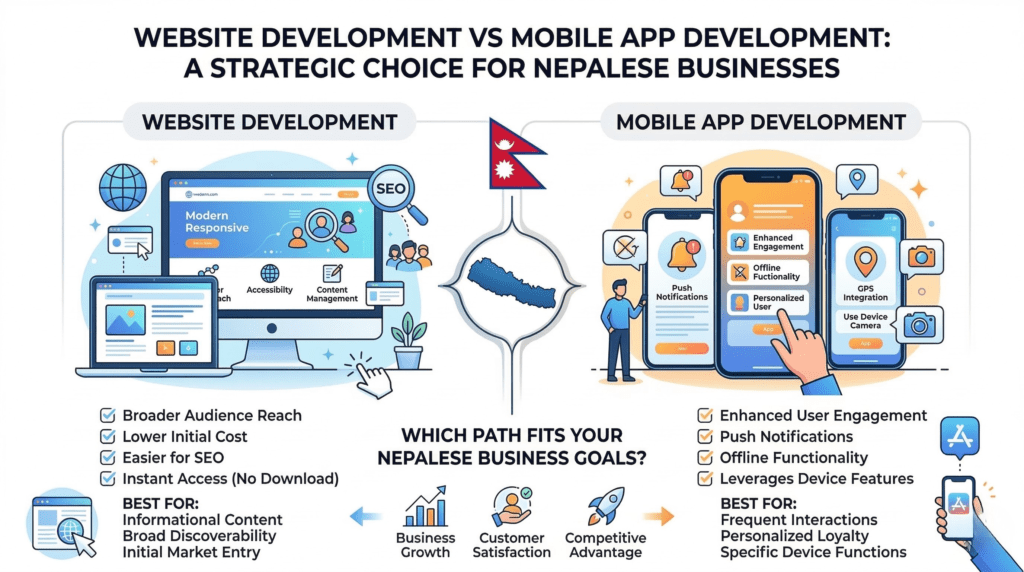
The website development meaning refers to the process of designing, building, and maintaining websites or web applications that users access through a web browser. A website can be opened on multiple devices, including laptops, tablets, and smartphones, without requiring installation.
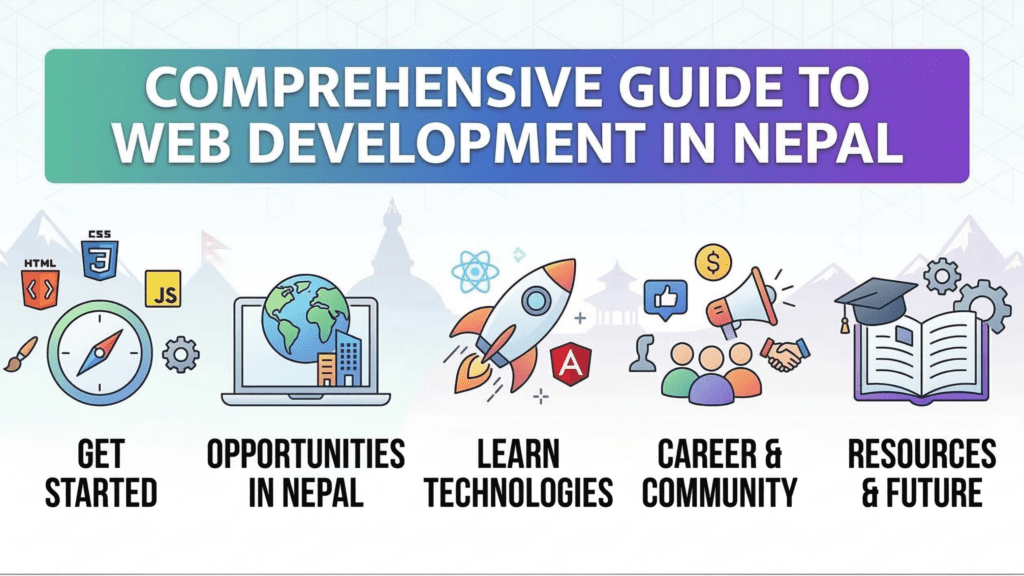
For many businesses in Nepal, a website is the first step toward building an online identity. If you want to learn about the technologies, tools, and processes involved in building modern websites, read our detailed guide Complete Guide to Web Development in Nepal. The article explains everything businesses should know before starting a website project.
Advantages of Website Development
1. Affordable Starting Point
Compared to mobile apps, websites usually require a smaller initial investment. This makes them a practical option for startups and small businesses.
2. Easy Access for Users
Anyone with an internet connection can visit a website instantly. Users do not need to download anything, which removes barriers to entry.
3. Search Engine Visibility
Websites can appear on search engines when people look for services or products. For example, someone searching for “digital marketing services in Nepal” or “best trekking agency in Kathmandu” can discover businesses through their websites.
4. Flexible Content Management
Businesses can easily update information, publish blog posts, add products, or modify service pages whenever needed.
What is Mobile App Development?

Mobile app development focuses on creating applications specifically designed for smartphones or tablets. These apps are typically downloaded from platforms such as the Google Play Store or Apple App Store.
Mobile apps are particularly useful for businesses that want frequent and direct interaction with customers.
Advantages of Mobile Apps
1. Faster Performance
Apps are optimized for mobile devices, which allows them to load quickly and deliver smoother navigation.
2. Direct Communication
Businesses can send push notifications to inform users about offers, updates, or new products.
3. Personalized Experience
Mobile apps can remember user preferences, which allows businesses to offer customized services or recommendations.
4. Strong Customer Loyalty
When users install an app, they are more likely to return frequently, creating stronger engagement with the brand.
Website vs Mobile App Development: Key Differences

| Feature | Website | Mobile App |
| Accessibility | Opens in browser | Requires download |
| Cost | Lower development cost | Higher development cost |
| Updates | Instant updates | Requires app updates |
| User Engagement | Moderate | Higher engagement |
| Performance | Internet dependent | Faster and optimized |
Both platforms serve different purposes, and choosing the right one depends on how customers interact with your business.
A Real Business Scenario in Nepal

Consider a clothing store owner in Kathmandu who wants to expand their business online.
Step 1: Launching a Website
The owner first creates a website where customers can:
- Browse clothing collections
- View prices and product details
- Learn about the brand
- Contact the store
This helps the business reach people who search for fashion stores online.
Step 2: Introducing a Mobile App
After building a loyal customer base, the store launches a mobile app that allows users to:
- Order clothes directly
- Receive notifications about new arrivals
- Access exclusive discounts
In this situation, the website helps the business gain visibility, while the mobile app helps retain loyal customers.
When Should Businesses in Nepal Choose a Website?

A website is often the better option when:
- The business is just starting its digital journey : For new businesses in Nepal, a website provides a simple and affordable way to establish an online presence. It helps companies introduce their services, share contact information, and reach potential customers searching online.
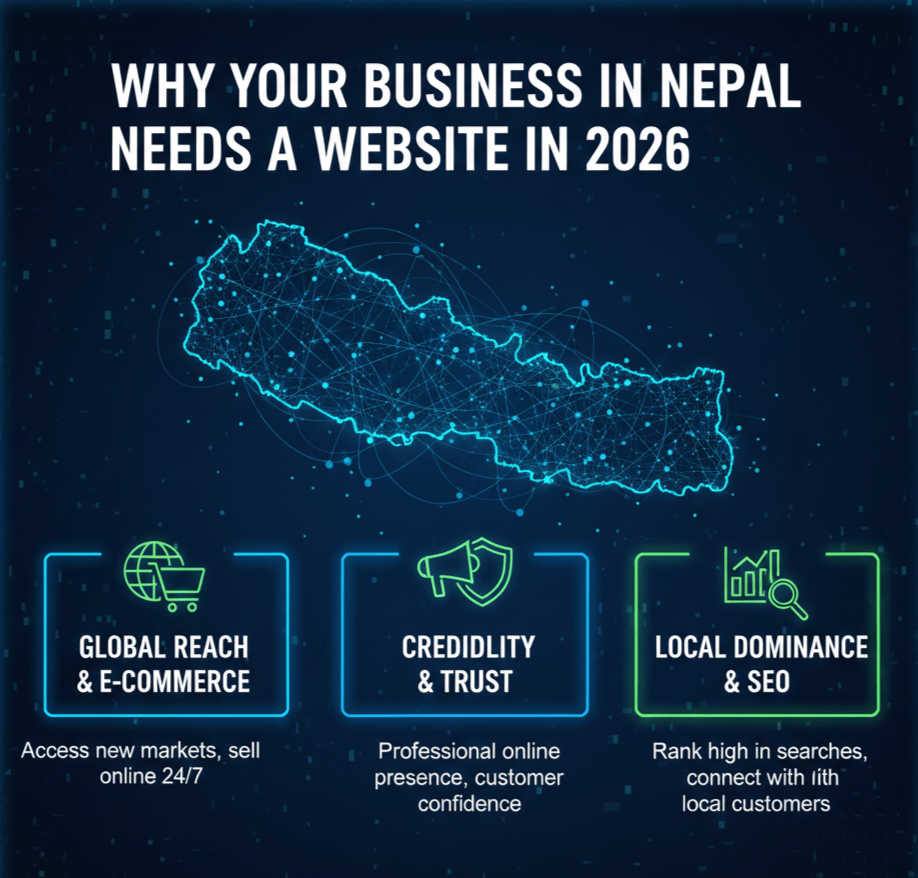
- The main goal is online visibility and credibility : A professional website helps businesses appear on search engines and builds trust with customers. When people search for services online, having a website makes the company look more credible and accessible.
- Budget limitations exist : Many startups and small businesses have limited budgets for digital development. In such cases, building a website is usually more cost-effective than developing a full mobile application. Budget is also an important factor when deciding between a website and a mobile app. If you want a detailed breakdown of pricing, check out our guide How Much Does Website Development Cost in Nepal? to understand the typical development costs for businesses.
- Customers only need information occasionally : If customers only visit occasionally to check services, contact details, or business information, a website is usually enough. In these situations, users prefer quickly accessing information through a browser rather than installing a mobile app.
Industries that benefit greatly from websites include:
- Travel and tourism companies
- Hotels and guesthouses
- Educational institutions
- Consulting firms
- Local service providers
These organizations use websites mainly to inform potential customers and generate leads.
When is a Mobile App the Better Choice?

A mobile app becomes more valuable when:
- Customers interact with the business regularly
- Online transactions occur frequently
- The company wants to provide personalized services
- Customer engagement is a priority
Examples include:
- Food delivery platforms
- Ride-hailing services
- Online shopping platforms
- Subscription-based services
For these businesses, mobile apps improve convenience and encourage repeated use.
The Smart Approach: Combining Both Platforms

In many cases, the best strategy is not choosing one over the other but using both together.
A website can serve as the main platform where new users discover the business. Once customers become regular users, they may choose to install the mobile app for a faster and more convenient experience.
This combined strategy helps businesses:
- Increase online visibility
- Build stronger customer relationships
- Provide multiple ways for users to interact with the brand
Questions Many Business Owners in Nepal Ask

When planning their digital strategy, entrepreneurs often face practical questions such as:
- Will customers actually download my app?
- Is starting with a website enough for my business?
- How much should I invest in digital development?
- Should I focus on visibility or customer engagement first?
These questions highlight why careful planning is essential before investing in digital technology.
Frequently Asked Questions

1. Do small businesses in Nepal really need a mobile app?
Not always. Many small businesses start with a website because it is affordable and effective for reaching new customers.
2. Is website development faster than mobile app development?
Yes. A standard website can often be built within a few weeks, while mobile apps usually take several months to design and develop.
3. Which platform helps businesses appear on Google search results?
Websites are indexed by search engines, making them more effective for online discovery.
4. Are mobile apps only useful for large companies?
No. Any business that relies on frequent customer interaction can benefit from having a mobile app.
5. Can a business upgrade from a website to an app later?
Yes. Many companies begin with a website and later expand into mobile apps as their customer base grows.
6. What should businesses consider before choosing between the two?
Businesses should evaluate their budget, customer behavior, and long-term digital goals.
Conclusion
Both website development and mobile app development offer valuable opportunities for businesses in Nepal. A website provides a strong digital foundation by making businesses visible online and accessible to a broad audience. On the other hand, mobile apps enhance user experience and strengthen customer relationships through personalized interactions.
For most businesses, starting with a well-designed website is a practical first step. As the company grows and customer engagement increases, adding a mobile app can further expand digital capabilities.
With guidance from experienced technology providers like Code in Nepal, businesses can choose the right approach and build digital solutions that support long-term growth in Nepal’s evolving digital economy.