In the modern digital landscape, visibility is everything. Brands compete not only for attention but also for authority in search engine results. Digital Public Relations (PR) has evolved into a powerful tool that bridges traditional media outreach with search engine optimization (SEO). When executed strategically, digital PR can significantly enhance a website’s authority, improve organic rankings, and drive sustainable traffic growth.
Video and social media platforms are also becoming essential components of modern PR campaigns, helping brands expand reach and generate high-quality backlinks. Businesses using video-based strategies can improve visibility and engagement explore more in Video SEO 2026: Dominate YouTube for Business.
This comprehensive guide explores how digital PR strategies can boost SEO authority. It covers the fundamentals of digital PR, its relationship with SEO, actionable strategies, tools, and real-world examples. The goal is to provide a clear, practical framework for building a strong online presence through earned media, content marketing, and link acquisition.
Understanding Digital PR and Its Role in SEO
What Is Digital PR?
Digital PR is a promotional tactic used by marketers to increase a brands online presence. It combines traditional public relations tactics such as media outreach and storytelling with digital marketing techniques like content creation, influencer collaboration, and link building.
Unlike traditional PR, which focuses on offline visibility through newspapers, magazines, and television, digital PR targets online publications, blogs, podcasts, and social media platforms. The ultimate goal is to earn high-quality backlinks, mentions, and coverage that enhance a brand’s digital footprint.
The Connection Between Digital PR and SEO
Search engines like Google use backlinks as a key ranking factor. When authoritative websites link to a brand’s content, it signals trust and relevance. Digital PR helps secure these backlinks naturally through earned media coverage, rather than through paid or manipulative link-building tactics.
Digital PR supports SEO in several ways:
- Backlink acquisition: High-quality backlinks improve domain authority and search rankings.
- Brand mentions: Even unlinked mentions can strengthen brand signals in search algorithms.
- Referral traffic: Media coverage drives targeted visitors to a website.
- Content amplification: PR campaigns increase the reach and visibility of SEO content.
- Reputation management: Positive press coverage enhances trust and credibility.
The Foundations of SEO Authority
What Is SEO Authority?
SEO authority refers to the perceived trustworthiness and expertise of a website in the eyes of search engines. It is influenced by factors such as backlink quality, content relevance, user engagement, and technical performance. Websites with higher authority tend to rank better for competitive keywords.
Key Components of SEO Authority
- Domain Authority (DA): A metric developed by Moz that predicts how well a website will rank on search engines.
- Page Authority (PA): Measures the strength of individual pages.
- Trust Flow and Citation Flow: Metrics from Majestic that assess link quality and quantity.
- E-E-A-T (Experience, Expertise, Authoritativeness, Trustworthiness): Google’s quality guidelines that evaluate content credibility.
Since SEO authority is closely tied to credibility, Digital PR efforts should be supported by strong E-E-A-T signals. Learn more in our guide, E-E-A-T 2026: Practical Steps to Build Trust.
Why Digital PR Is Essential for Building Authority
Traditional SEO tactics like keyword optimization and technical improvements are necessary but insufficient for long-term authority. Digital PR complements these efforts by earning editorial links from reputable sources, which are far more valuable than directory or guest post links. These earned links act as endorsements, signaling to search engines that the brand is a trusted source of information.
Core Digital PR Strategies That Boost SEO Authority

Data-Driven Storytelling
Data-driven content is one of the most effective ways to attract media attention and backlinks. Journalists and bloggers often seek credible data to support their stories. By conducting original research, surveys, or data analysis, brands can create unique insights that others want to reference.
Steps to implement:
- Identify trending topics in the industry.
- Collect data through surveys, internal analytics, or public datasets.
- Visualize findings using infographics or charts.
- Craft a compelling press release or blog post.
- Pitch the story to relevant media outlets.
Example: A cybersecurity company publishes an annual “State of Online Privacy” report, which gets cited by major tech publications, earning dozens of backlinks.
Newsjacking
Newsjacking involves inserting a brand’s perspective into trending news stories. When done quickly and thoughtfully, it can generate significant media coverage and backlinks.
Best practices:
- Monitor breaking news using tools like Google Trends or Talkwalker Alerts.
- Respond with expert commentary or data insights.
- Ensure relevance to the brand’s niche.
- Avoid controversial or sensitive topics that could harm reputation.
Example: A financial expert comments on a sudden stock market crash, offering insights that get featured in major business outlets.
Thought Leadership and Expert Commentary
Positioning brand representatives as thought leaders builds credibility and attracts organic backlinks. Journalists often seek expert opinions for their articles, and being quoted in reputable publications enhances both brand visibility and SEO authority.
Maintaining consistent messaging across all digital channels is equally important for establishing long-term credibility and audience trust. A strong omnichannel approach helps brands deliver a unified experience while strengthening their overall marketing impact explore more in Omnichannel Marketing: Blending Online and Offline Strategies in 2026.
Implementation tips:
- Create a media kit with bios, headshots, and topic expertise.
- Register on platforms like HARO (Help a Reporter Out) or Qwoted.
- Publish opinion pieces or guest articles on industry websites.
- Maintain consistency in messaging and tone.
Digital Press Releases
Modern press releases are optimized for online distribution. They include multimedia elements, keyword-rich headlines, and links to relevant landing pages.
Key elements:
- Compelling headline with target keywords.
- Concise summary of the news.
- Quotes from company leaders.
- Links to supporting content or resources.
- Contact information for media inquiries.
Distributing press releases through digital PR platforms like PR Newswire or Business Wire can generate backlinks from news aggregators and journalists.
Influencer and Blogger Outreach

Collaborating with influencers and niche bloggers can amplify content reach and generate high-quality backlinks. Unlike traditional influencer marketing, digital PR focuses on earned collaborations rather than paid promotions.
Steps:
- Identify influencers with relevant audiences.
- Offer valuable content or data for collaboration.
- Build long-term relationships through consistent engagement.
- Track backlinks and referral traffic from influencer content.
Content Syndication
Content syndication involves republishing existing content on third-party platforms to reach wider audiences. When done correctly, it can drive traffic and backlinks without harming SEO.
Recommended platforms: Medium, LinkedIn Articles, and industry-specific portals.
Ensure canonical tags are used to prevent duplicate content issues.
Interactive and Visual Content
Interactive tools, infographics, and visual reports attract more backlinks than plain text. Visual content simplifies complex data and increases shareability.
Examples:
- Calculators or quizzes related to industry topics.
- Interactive maps or timelines.
- Infographics summarizing research findings.
Digital Events and Webinars
Hosting webinars, virtual conferences, or panel discussions can generate buzz and backlinks from event listings, partner websites, and attendees.
Execution tips:
- Collaborate with industry experts.
- Promote events through press releases and social media.
- Record sessions and repurpose them into blog posts or video content.
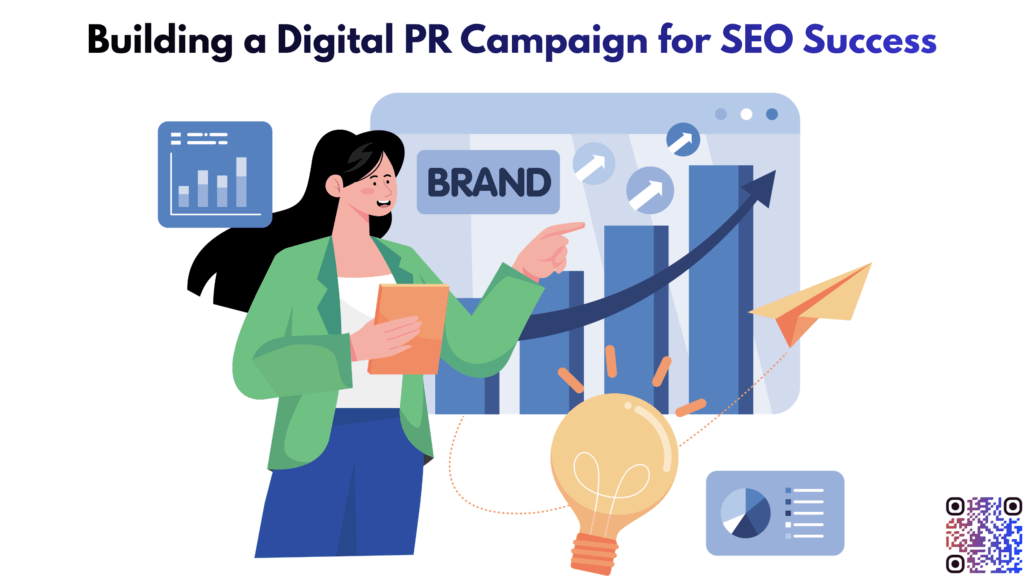
Building a Digital PR Campaign for SEO Success
Setting Clear Objectives
Define measurable goals aligned with SEO outcomes:
- Increase domain authority by a specific percentage.
- Earn a target number of backlinks from high-authority domains.
- Improve keyword rankings for specific topics.
- Boost referral traffic from media coverage.
Audience and Media Research
Identify target audiences and the publications they trust. Use media databases to find journalists covering relevant topics. Personalize outreach to increase response rates.
Crafting the Perfect Pitch
A successful pitch is concise, relevant, and newsworthy. It should highlight why the story matters and how it benefits the publication’s audience.
Pitch structure:
- Personalized greeting.
- Brief introduction of the brand or expert.
- Summary of the story or data.
- Supporting visuals or resources.
- Clear call to action (e.g., interview offer or data access).
Measuring Campaign Performance
Track performance using both SEO and PR metrics:
- Number and quality of backlinks.
- Domain authority growth.
- Referral traffic and engagement.
- Media mentions and sentiment analysis.
- Keyword ranking improvements.
Tools like Ahrefs, SEMrush, and Google Analytics provide detailed insights into campaign impact.
Tools and Platforms for Digital PR and SEO Integration
| Category | Tool | Purpose |
| Media Monitoring | Mention, Brand24 | Track brand mentions and sentiment |
| Outreach Management | BuzzStream, Pitchbox | Manage journalist and influencer outreach |
| SEO Analysis | Ahrefs, Moz, SEMrush | Analyze backlinks and domain authority |
| Content Research | BuzzSumo, Exploding Topics | Identify trending topics |
| Press Release Distribution | PR Newswire, Business Wire | Distribute digital press releases |
| Data Visualization | Canva, Infogram | Create infographics and visual assets |
Common Mistakes in Digital PR for SEO
- Focusing on quantity over quality: A few high-authority backlinks are more valuable than dozens of low-quality ones.
- Ignoring relevance: Links from unrelated sites can appear manipulative.
- Neglecting follow-up: Building relationships requires consistent communication.
- Over-optimization: Excessive keyword use in press releases can reduce credibility.
- Lack of measurement: Without tracking results, it’s impossible to refine strategies.
- Failure to align PR and SEO teams: Collaboration ensures consistent messaging and link-building goals.
- Not leveraging evergreen content: PR campaigns should include assets that remain relevant over time.
Advanced Digital PR Techniques for Long-Term SEO Growth
Building Digital PR Assets
Digital PR assets are evergreen resources that attract backlinks over time. Examples include:
- Industry reports: Annual or quarterly insights that journalists reference repeatedly.
- Resource hubs: Collections of guides, templates, or tools.
- Glossaries: Definitions of key industry terms that attract educational backlinks.
- Interactive databases: Tools that allow users to explore data dynamically.
Leveraging Social Proof and Testimonials

Social proof enhances credibility and encourages media coverage. Featuring testimonials from clients, partners, or influencers can strengthen PR pitches and improve conversion rates.
Integrating PR with Content Marketing
Digital PR and content marketing should operate in synergy. PR amplifies content reach, while content marketing provides the assets PR campaigns promote.
Integration examples:
- Launching a blog series supported by press coverage.
- Promoting whitepapers through journalist outreach.
- Using PR feedback to refine content strategy.
Local Digital PR for Regional SEO
Local PR campaigns help businesses dominate regional search results.
Tactics include:
- Partnering with local charities or events.
- Submitting stories to regional news outlets.
- Highlighting community involvement.
- Optimizing Google Business Profile with PR mentions.
Using AI and Automation in Digital PR
Artificial intelligence tools streamline research, outreach, and analysis.
Applications:
- AI-driven media list generation.
- Automated sentiment analysis.
- Predictive analytics for identifying trending topics.
- Chatbots for journalist engagement.
Crisis Management and Reputation Recovery
Digital PR also plays a crucial role in managing negative publicity.
Steps for recovery:
- Monitor mentions continuously.
- Respond transparently and promptly.
- Publish positive stories to rebuild trust.
- Collaborate with reputable media to shift narrative.
- Optimize owned content to outrank negative results.
Case Studies: Digital PR in Action

Airbnb’s “Live Anywhere” Campaign
Airbnb launched a global campaign inviting people to live anywhere for a year. The story was picked up by major outlets like CNN and Forbes, generating thousands of backlinks and boosting brand authority.
HubSpot’s Annual Marketing Report
HubSpot’s data-driven reports attract consistent media coverage and backlinks from marketing publications, reinforcing its position as an industry leader.
Spotify Wrapped
Spotify’s personalized year-end summaries generate massive social sharing and media coverage, indirectly boosting SEO through brand mentions and backlinks.
Canva’s Design Trends Report
Canva’s annual “Design Trends” report earns coverage from design blogs and marketing outlets, positioning the brand as a creative authority while generating high-quality backlinks.
Patagonia’s Environmental Advocacy
Patagonia’s PR campaigns centered on sustainability and activism have earned global media attention. These initiatives not only strengthen brand reputation but also attract backlinks from environmental and business publications, enhancing SEO authority.
Nike’s Equality Campaign
Nike’s “Equality” campaign combined storytelling, social responsibility, and influencer collaboration. The campaign generated extensive media coverage, reinforcing Nike’s brand authority and improving its organic visibility across social and search platforms.
The Future of Digital PR and SEO
As search algorithms evolve, the line between PR and SEO continues to blur. Future trends include:
- AI-driven media targeting: Predictive analytics for identifying journalists likely to cover specific topics.
- Voice search optimization: Crafting PR content that aligns with conversational queries.
- Brand authenticity: Genuine storytelling will outweigh promotional messaging.
- Integrated analytics: Unified dashboards combining PR and SEO metrics.
- Sustainability storytelling: Brands focusing on environmental and social impact will gain more media traction.
- Video-based PR: Short-form video pitches and visual storytelling will dominate outreach strategies.
- Personalized journalist experiences: Tailored pitches using behavioral data will improve response rates.
- Decentralized media ecosystems: As independent creators grow, PR strategies will adapt to micro-publications and niche communities.
Building a Sustainable Digital PR Framework
Aligning PR with Business Goals
Digital PR should support broader business objectives such as lead generation, brand awareness, and customer retention. Every campaign must tie back to measurable outcomes.
Digital PR can help e-commerce businesses build trust, attract backlinks, and increase organic visibility, especially during the early stages of brand growth discussed in How to Start an E-commerce Website in Nepal.
Continuous Relationship Building
Long-term success depends on nurturing relationships with journalists, editors, and influencers. Personalized communication and consistent value delivery foster trust and recurring coverage.
Repurposing PR Content
Maximize ROI by repurposing PR assets into multiple formats:
- Turn press releases into blog posts.
- Convert interviews into podcasts.
- Transform reports into infographics.
- Share media coverage on social platforms.
Ethical Considerations in Digital PR
Transparency and authenticity are essential. Avoid manipulative link schemes, fake news, or exaggerated claims. Ethical PR builds sustainable authority and long-term trust.
Measuring Long-Term Impact
Beyond immediate backlinks, digital PR should be evaluated for its cumulative effect on brand equity, organic visibility, and audience trust. Tracking metrics such as branded search volume, engagement rates, and repeat media coverage provides a holistic view of success.
Building Internal PR Capabilities
Organizations benefit from developing in-house PR expertise. Training teams in media relations, SEO fundamentals, and storytelling ensures consistent messaging and faster response to opportunities. Combining internal knowledge with external agency support creates a balanced, scalable PR model.
FAQ: Digital PR Strategies That Boost SEO Authority

1. What is Digital PR?
Digital PR is an online marketing strategy focused on increasing brand visibility through media coverage, backlinks, influencer mentions, and online publications. It helps businesses improve both brand reputation and search engine rankings.
2. How does Digital PR improve SEO authority?
Digital PR earns high-quality backlinks from trusted websites. Search engines view these backlinks as signals of credibility, helping improve domain authority, keyword rankings, and organic traffic.
3. Why are backlinks important in Digital PR?
Backlinks act like votes of confidence from other websites. Links from authoritative sites can strengthen your SEO performance, improve trustworthiness, and increase visibility in search results.
4. What are the best Digital PR strategies for SEO in 2026?
Popular Digital PR strategies include:
- Data-driven content campaigns
- Influencer collaborations
- Guest posting
- Press releases
- HARO (Help a Reporter Out) outreach
- Viral content marketing
- Thought leadership articles
- Podcast and webinar appearances
5. How can content marketing support Digital PR?
High-quality content such as blogs, research reports, infographics, and case studies attracts journalists and bloggers who may reference and link to your website.
6. What role do influencers play in Digital PR?
Influencers help brands reach larger audiences, increase credibility, and generate social signals that can indirectly support SEO performance.
7. Are press releases still effective for SEO?
Yes, modern press releases can improve visibility and brand awareness when distributed through reputable media outlets. While direct SEO impact may vary, they can attract journalists and valuable backlinks.
8. How does Digital PR differ from traditional PR?
Traditional PR focuses mainly on offline media like TV, newspapers, and radio, while Digital PR targets online publications, blogs, social media, and search engine visibility.
Conclusion
Digital PR is no longer a supplementary marketing tactic it is a cornerstone of modern SEO strategy. By combining storytelling, data, and relationship-building, brands can earn authoritative backlinks, strengthen their online reputation, and achieve sustainable search visibility. The most successful digital PR campaigns are those that align creativity with measurable SEO outcomes, turning media coverage into long-term authority.
Efficient content distribution is also essential for digital PR success, and modern headless CMS platforms make publishing across multiple channels faster and more scalable learn more in Headless CMS 2026: Revolutionize Your Code & Content Globally.
When executed strategically, digital PR transforms a brand from a participant in the digital space into a recognized leader within its industry. The integration of PR and SEO ensures that every piece of earned media contributes not only to brand awareness but also to measurable search performance. As technology evolves, the brands that master this synergy will dominate the digital landscape for years to come.