In the digital marketing world, two powerful strategies dominate the conversation: SEO vs SEM. Both are essential for driving traffic, increasing visibility, and growing a business online. However, understanding the difference between them and knowing when to use each can be challenging. This guide explores SEO vs SEM in depth, explaining their definitions, benefits, challenges, and how to choose the right approach for specific business goals.
The debate of SEO vs SEM is not about which is better overall but about which is better for a particular situation. Each has unique strengths and plays a vital role in a complete digital marketing plan. By the end of this guide, readers will have a clear understanding of how SEO vs SEM can work together or separately to achieve success.
What Is SEO?

Search engine optimization (SEO) is the practice of creating and optimizing relevant, authoritative content in a way that helps visitors (and search engine crawlers) find answers to their key questions. It focuses on optimizing content, structure, and technical elements to rank higher on search engines like Google. When comparing SEO vs SEM, SEO is the long-term strategy that builds authority and trust over time.
Key Components of SEO
- On-Page SEO – Optimizing individual pages with relevant keywords, meta tags, headings, and internal links.
- Off-Page SEO – Building backlinks, social signals, and brand mentions to increase authority.
- Technical SEO – Improving site speed, mobile-friendliness, and crawlability.
- Content SEO – Creating valuable, keyword-rich content that satisfies user intent.
Benefits of SEO
- Cost-Effective: Once established, organic traffic is free.
- Long-Term Results: SEO continues to deliver results over time.
- Credibility: High-ranking pages are seen as more trustworthy.
- Sustainability: SEO builds a strong foundation for consistent growth.
When analyzing SEO vs SEM, SEO stands out for its ability to generate ongoing traffic without continuous ad spending.
What Is SEM?

Search Engine Marketing (SEM) is a broader term that includes both paid and organic strategies to increase visibility on search engines. However, in most contexts, SEM refers specifically to paid advertising, such as Google Ads. In the SEO vs SEM comparison, SEM is the paid side of search marketing.
Key Components of SEM
- Paid Search Ads: Sponsored listings that appear at the top of search results.
- Pay-Per-Click (PPC): Advertisers pay each time a user clicks on their ad.
- Ad Targeting: Using demographics, keywords, and location to reach specific audiences.
- Performance Tracking: Measuring clicks, impressions, and conversions.
Benefits of SEM
- Immediate Results: Ads appear instantly after launch.
- Precise Targeting: Reach specific audiences based on intent and behavior.
- Scalability: Budgets can be adjusted easily.
- Data Insights: Detailed analytics help refine campaigns.
In the SEO vs SEM debate, SEM is ideal for businesses seeking quick visibility and measurable outcomes.
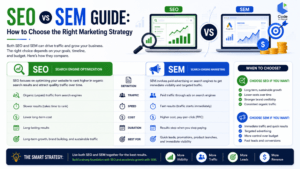
SEO vs SEM: The Core Differences
Understanding SEO vs SEM requires examining how each strategy functions and what outcomes they deliver. While both aim to increase visibility, their methods and timelines differ significantly.
| Aspect | SEO | SEM |
| Cost | Free traffic after optimization | Paid per click or impression |
| Speed | Slow to build results | Immediate visibility |
| Longevity | Long-term growth | Short-term results |
| Placement | Organic search results | Paid search ads |
| Trust Level | High credibility | Perceived as ads |
| Analytics | Organic metrics | Paid campaign data |
| Best For | Sustainable growth | Quick traffic and testing |
The SEO vs SEM comparison shows that SEO focuses on building a lasting presence, while SEM delivers instant exposure. Both can complement each other when used strategically.
How SEO Works

To understand SEO vs SEM, it’s important to know how SEO functions. Search engines use algorithms to determine which pages best match a user’s query. SEO helps align a website with these algorithms through optimization techniques.
The SEO Process
- Keyword Research: Identifying terms users search for.
- Content Creation: Producing valuable, relevant content.
- On-Page Optimization: Using keywords in titles, headings, and meta descriptions.
- Link Building: Earning backlinks from reputable sites.
- Technical Improvements: Enhancing site performance and structure.
- Monitoring and Adjusting: Tracking rankings and refining strategies.
A well-optimized website also follows the latest web development trends to improve loading speed, mobile responsiveness, and overall search engine performance. In the SEO vs SEM context, SEO requires patience and consistency but yields sustainable results.
How SEM Works
SEM operates through paid advertising platforms like Google Ads. Businesses bid on keywords, and their ads appear when users search for those terms. The SEO vs SEM distinction becomes clear here SEM is transactional, while SEO is organic.
The SEM Process
- Keyword Selection: Choosing high-intent keywords.
- Ad Creation: Writing compelling ad copy.
- Bidding Strategy: Setting budgets and bids.
- Landing Page Optimization: Ensuring pages convert visitors.
- Performance Tracking: Measuring ROI and adjusting campaigns.
In SEO vs SEM, SEM provides control over visibility and audience targeting, making it ideal for time-sensitive promotions.
SEO vs SEM: Pros and Cons
SEO Pros
- Builds long-term authority
- Generates consistent traffic
- Improves brand credibility
- Cost-effective over time
SEO Cons
- Takes time to show results
- Requires ongoing updates
- Algorithm changes can affect rankings
SEM Pros
- Delivers instant visibility
- Offers precise targeting
- Provides measurable results
- Flexible budgeting
SEM Cons
- Can be expensive
- Traffic stops when ads stop
- Requires constant management
The SEO vs SEM comparison highlights that each has trade-offs. SEO is a marathon, while SEM is a sprint. Many businesses improve their online visibility by combining SEO with online advertising, allowing them to generate quick results while building sustainable organic growth over time.
When to Use SEO
Choosing between SEO vs SEM depends on business goals. SEO is best when aiming for sustainable growth and long-term visibility.
Ideal Scenarios for SEO
- Building brand authority
- Targeting informational searches
- Competing in less saturated markets
- Creating evergreen content
SEO is the right choice when patience and consistency are possible. In the SEO vs SEM framework, SEO builds a foundation that supports future marketing efforts.
When to Use SEM

SEM is ideal for businesses that need immediate results or want to test new markets. In the SEO vs SEM comparison, SEM shines in short-term campaigns.
Ideal Scenarios for SEM
- Launching new products
- Running seasonal promotions
- Testing keyword performance
- Driving traffic quickly
SEM allows businesses to appear instantly in search results, making it a powerful tool for fast growth. However, in SEO vs SEM, SEM’s benefits end when the budget runs out.
Combining SEO and SEM
The most effective digital marketing strategies often combine both. The SEO vs SEM debate doesn’t have to be a choice between one or the other. Instead, they can complement each other.
How They Work Together
- Keyword Insights: SEM data helps refine SEO keyword strategies.
- Testing Content: SEM can test which messages perform best before investing in SEO content.
- Visibility: Combining both ensures presence in both paid and organic results.
- Data Sharing: Analytics from SEM can guide SEO improvements.
In SEO vs SEM, integration creates a balanced approach that maximizes reach and efficiency.
Measuring Success in SEO vs SEM

Both strategies require tracking performance to ensure effectiveness. The metrics differ, but both provide valuable insights.
SEO Metrics
- Organic traffic
- Keyword rankings
- Bounce rate
- Backlinks
- Conversion rate
SEM Metrics
- Click-through rate (CTR)
- Cost per click (CPC)
- Quality score
- Conversion rate
- Return on ad spend (ROAS)
In SEO vs SEM, SEO metrics focus on organic growth, while SEM metrics emphasize paid performance. Together, they provide a complete view of marketing success.
Cost Comparison: SEO vs SEM

Budget plays a major role in deciding between SEO vs SEM. SEO requires time and expertise, while SEM demands direct financial investment.
SEO Costs
- Content creation
- Technical optimization
- Link building
- Tools and analytics
SEM Costs
- Ad spend
- Management fees
- Landing page design
- Ongoing optimization
In SEO vs SEM, SEO may seem cheaper long-term, but SEM offers faster returns. The right choice depends on available resources and goals.
Timeframe for Results

The timeline for results is one of the biggest differences in SEO vs SEM.
- SEO: Takes 3–6 months to show significant results.
- SEM: Delivers results immediately after launch.
Businesses seeking quick wins may prefer SEM, while those focused on sustainable growth should invest in SEO. The SEO vs SEM timeline comparison helps set realistic expectations.
SEO vs SEM for Different Business Types
Startups
Startups often benefit from SEM initially to gain visibility quickly. Over time, they can shift focus to SEO for sustainable growth. The SEO vs SEM balance helps startups manage limited budgets effectively.
Small Businesses
Small businesses can use SEO to build local visibility and SEM for targeted promotions. Combining both ensures steady traffic and brand awareness.
E-Commerce
E-commerce brands thrive by using SEM for product ads and SEO for category pages. The SEO vs SEM mix drives both immediate sales and long-term rankings.
Large Enterprises
Enterprises often invest heavily in both. SEO strengthens brand authority, while SEM supports large-scale campaigns. The SEO vs SEM synergy maximizes reach across all channels.
Common Mistakes in SEO vs SEM Strategies
- Ignoring Analytics: Failing to track performance leads to wasted effort.
- Overlapping Keywords: Competing with own ads or pages reduces efficiency.
- Neglecting Mobile Optimization: Both SEO and SEM rely on mobile-friendly design.
- Poor Budget Allocation: Spending too much on one strategy can limit results.
- Lack of Integration: Treating SEO and SEM as separate silos weakens performance.
Avoiding these mistakes ensures a balanced SEO vs SEM strategy that delivers consistent results.
Tools for Managing SEO vs SEM
SEO Tools
- Google Search Console
- Ahrefs
- SEMrush
- Moz
- Yoast SEO
SEM Tools
- Google Ads
- Bing Ads
- SpyFu
- WordStream
- Optmyzr
Using the right tools enhances performance tracking and optimization in SEO vs SEM campaigns.
Case Studies: SEO vs SEM in Action
Case Study 1: Local Business Growth
A local bakery used SEO to rank for “best bakery near me.” Over six months, organic traffic increased by 120%. Later, SEM ads promoted seasonal offers, boosting sales by 40%. The SEO vs SEM combination created both steady and immediate growth.
Case Study 2: E-Commerce Expansion
An online clothing store launched SEM campaigns for new arrivals while optimizing product pages for SEO. SEM drove instant traffic, while SEO improved long-term rankings. The SEO vs SEM strategy doubled revenue within a year.
Case Study 3: SaaS Company Launch
A software startup used SEM to generate leads quickly, then invested in SEO to reduce ad dependency. Within eight months, organic leads surpassed paid ones. The SEO vs SEM transition ensured sustainable growth.
Future Trends in SEO vs SEM

The digital landscape continues to evolve, influencing how SEO vs SEM strategies are applied. Search engines are becoming smarter, user behavior is changing, and technology continues to reshape how people find and interact with information online. Businesses that adapt to these shifts will stay ahead of the competition.
Emerging Trends
AI and Automation: Machine learning enhances ad targeting and SEO optimization. AI tools now analyze search intent, predict trends, and automate bidding strategies in SEM. In SEO, AI helps create optimized content, identify ranking opportunities, and personalize user experiences. As AI becomes more advanced, marketers must focus on human creativity and strategy to complement automation.
- Voice Search: SEO must adapt to conversational queries. With the rise of smart speakers and voice assistants, users are searching in natural language. Optimizing for long-tail, question-based keywords and featured snippets will be key to capturing voice search traffic.
- Visual Search: SEM ads and SEO content will include more images and videos. Platforms like Google Lens and Pinterest are changing how users discover products visually. Businesses should optimize images with descriptive alt text and use video content to engage audiences.
- Privacy Regulations: Data tracking changes affect both strategies. With stricter privacy laws and cookie restrictions, marketers must rely on first-party data and transparent consent practices. Building trust through ethical data use will become a competitive advantage.
- Integrated Campaigns: The line between SEO and SEM continues to blur. Unified campaigns that combine organic and paid insights will dominate future marketing strategies.
- Zero-Click Searches: More users are finding answers directly on search results pages through featured snippets and knowledge panels. This trend challenges both SEO and SEM to focus on brand visibility rather than just clicks. Creating content that positions a brand as an authority is essential.
- Video Content Growth: Video continues to dominate search and social platforms. Both SEO and SEM must adapt by optimizing video titles, descriptions, and transcripts for search engines. Video ads and tutorials can boost engagement and conversions.
- Mobile-First Indexing Evolution: Google’s mobile-first indexing means websites must perform flawlessly on mobile devices. Fast loading times, responsive design, and mobile-friendly content are now critical for both SEO and SEM success.
Staying updated ensures that SEO vs SEM strategies remain effective in a changing environment. Marketers who embrace innovation, invest in technology, and focus on user experience will lead the next generation of search marketing.
Choosing the Right Strategy

Selecting between SEO vs SEM depends on goals, budget, and timeline.
Key Considerations
- Budget: SEM requires ongoing spending; SEO needs time investment.
- Timeline: SEM suits short-term goals; SEO fits long-term growth.
- Competition: Highly competitive industries may need both.
- Resources: SEO demands content creation; SEM needs ad management.
A balanced SEO vs SEM approach often delivers the best results, combining immediate visibility with lasting authority.
Building a Unified SEO vs SEM Strategy
To maximize results, businesses should integrate both strategies into one cohesive plan. A unified SEO vs SEM strategy allows teams to share data, align goals, and create a consistent brand experience across all search channels. When SEO and SEM work together, they strengthen each other’s performance SEO builds credibility and long-term visibility, while SEM provides immediate insights and traffic that can guide optimization efforts.
Steps to Integration
- Set Clear Goals: Define what success looks like for both SEO and SEM. Establish shared KPIs such as traffic growth, conversion rates, and cost per acquisition to ensure both teams work toward the same objectives.
- Align Keywords: Use SEM data to guide SEO keyword targeting. Paid campaigns reveal which keywords convert best, helping SEO teams focus on high-value terms that drive results.
- Coordinate Messaging: Ensure consistent branding across ads and organic content. Unified messaging builds trust and reinforces brand identity, improving click-through rates and engagement.
- Share Insights: Use analytics from both to refine campaigns. SEM provides fast feedback on ad performance, while SEO offers long-term insights into user behavior and content effectiveness.
- Monitor Performance: Continuously test and adjust strategies. Track metrics like organic traffic, paid clicks, and conversion rates to measure the combined impact of both channels.
A unified SEO vs SEM strategy ensures that both channels support each other, driving stronger overall performance. Businesses should also coordinate budgets between SEO and SEM, allocating funds based on campaign goals and seasonal trends. For example, more budget can go to SEM during product launches, while SEO investments focus on evergreen content. Collaboration between SEO specialists, paid media managers, and content creators is essential to maintain alignment. Regular meetings, shared dashboards, and cross-channel reporting help teams stay informed and agile. Measuring success involves analyzing total search visibility, blended ROI, and the overall growth in brand presence. When executed effectively, a unified SEO vs SEM approach delivers both immediate impact and lasting growth.
FAQ: SEO vs SEM Guide – How to Choose the Right Marketing Strategy

1. What is the difference between SEO and SEM?
SEO (Search Engine Optimization) focuses on improving your website’s organic rankings in search engines, while SEM (Search Engine Marketing) uses paid advertisements to appear at the top of search results. SEO delivers long-term traffic, whereas SEM provides immediate visibility.
2. Which is better: SEO or SEM?
Neither is universally better. SEO is ideal for sustainable, long-term growth, while SEM is best for quick results, product launches, promotions, or highly competitive keywords. Many businesses achieve the best results by combining both.
3. Is SEO free compared to SEM?
SEO does not require paying for each click, but it does require investment in content creation, optimization, and technical improvements. SEM requires paying for ad placements, typically on a pay-per-click (PPC) basis.
4. How long does SEO take to show results?
Most websites begin seeing noticeable SEO improvements within 3–6 months, although competitive industries may take longer. Results depend on your website’s authority, competition, and optimization efforts.
5. How quickly does SEM generate traffic?
SEM can generate website traffic almost immediately after your advertising campaign is approved and launched, making it ideal for businesses that need fast visibility.
6. Is SEO better for small businesses?
Yes. SEO is often an excellent long-term investment for small businesses because it builds organic traffic, increases credibility, and reduces customer acquisition costs over time.
7. When should I use SEM instead of SEO?
SEM is a better choice when you need:
- Immediate website traffic
- Fast lead generation
- Product or service launches
- Seasonal promotions
- Highly competitive keyword targeting
8. Can SEO and SEM work together?
Absolutely. Combining SEO and SEM allows businesses to gain immediate traffic through paid ads while building long-term organic visibility, maximizing overall search engine performance.
Conclusion
The SEO vs SEM debate is not about choosing one over the other but understanding how each fits into a broader marketing plan. SEO builds long-term authority and trust, while SEM delivers immediate visibility and measurable results. Together, they form a powerful combination that drives both short-term and long-term success.
Businesses that master SEO vs SEM can adapt to changing markets, reach their target audiences effectively, and achieve sustainable growth. The key is balance using SEO for stability and SEM for speed. By integrating both, any business can create a comprehensive digital marketing strategy that stands the test of time.