Brand awareness is a fundamental aspect of marketing that references consumer recognition of a brand and its products or services. When people recognize and trust a brand, they are more likely to choose it over competitors. Whether a company is new or established, improving brand awareness helps it stay relevant and memorable. This guide explores 12 powerful tactics to boost brand awareness and achieve better visibility across digital and offline channels. Each tactic focuses on practical strategies that can be applied by businesses of all sizes to strengthen their presence and connect with their audience.
Beyond visibility, brand awareness influences customer perception, purchase decisions, and long-term loyalty. A strong brand presence builds credibility, encourages word-of-mouth marketing, and creates emotional connections that drive repeat business. In today’s fast-paced digital world, where consumers are bombarded with countless choices, standing out requires more than just advertising it demands authenticity, consistency, and engagement. This guide provides actionable insights to help businesses build lasting recognition and trust through effective brand awareness strategies.
1. Develop a Strong Brand Identity
A strong brand identity is the foundation of effective brand awareness. It defines how a business presents itself to the world and how customers perceive it. A clear identity includes a logo, color palette, typography, tone of voice, and consistent messaging.
To build a recognizable identity:
- Define the brand’s mission, vision, and values.
- Create a visual style guide to maintain consistency across all platforms.
- Use the same tone and personality in all communications.
A consistent brand voice becomes even more powerful when supported by an omnichannel marketing approach that delivers the same message across websites, social media, email, and offline channels.
Consistency helps people remember a brand. When customers see the same colors, fonts, and messages repeatedly, they begin to associate them with the company. Over time, this repetition strengthens brand awareness and builds trust.
A strong identity also communicates professionalism and reliability, setting the brand apart from competitors. It ensures that every interaction whether online, in-store, or through advertising reflects the same core message. This alignment between visuals, values, and voice creates a cohesive experience that resonates emotionally with audiences, making brand awareness more impactful and long-lasting.
2. Leverage Social Media Marketing
Social media is one of the most effective tools for increasing brand awareness. Platforms like Instagram, Facebook, LinkedIn, TikTok, and X (formerly Twitter) allow brands to reach millions of users daily. The key is to create engaging, shareable content that resonates with the target audience.
Effective social media strategies include:
- Posting regularly with a consistent voice and visual style.
- Using hashtags strategically to reach new audiences.
- Engaging with followers through comments, polls, and direct messages.
- Collaborating with influencers or brand advocates.
Social media algorithms favor engagement. The more people interact with a brand’s posts, the more visibility it gains. This organic exposure significantly boosts brand awareness and helps attract new followers.
3. Invest in Content Marketing

Content marketing is a long-term strategy that builds brand awareness by providing valuable information to the audience. High-quality content positions a brand as an authority in its industry and keeps it top of mind.
Types of content that enhance visibility include:
- Blog posts that answer common questions or solve problems.
- Videos that demonstrate products or share behind-the-scenes stories.
- Infographics that simplify complex topics.
- Podcasts that discuss industry trends or customer success stories.
The goal is to create content that educates, entertains, or inspires. When people find content useful, they share it, which expands reach and strengthens brand awareness naturally.
4. Optimize for Search Engines (SEO)
Search engine optimization (SEO) is essential for improving online visibility and recognition. When a brand appears at the top of search results, it gains credibility and attracts more visitors.
Key SEO tactics include:
- Conducting keyword research to identify relevant search terms.
- Optimizing website content, titles, and meta descriptions.
- Building high-quality backlinks from reputable websites.
- Ensuring fast page load times and mobile-friendly design.
Earning quality backlinks through effective Digital PR strategies can strengthen SEO authority, improve search rankings, and increase long-term brand visibility. SEO not only drives traffic but also reinforces brand awareness. When users repeatedly see a brand’s name in search results, they begin to recognize and trust it, even if they don’t click immediately.
5. Collaborate with Influencers

Influencer marketing is a powerful way to expand brand awareness through trusted voices. Influencers already have loyal audiences who value their opinions. When they promote a brand, their followers are more likely to take notice.
To make influencer partnerships effective:
- Choose influencers whose values align with the brand.
- Focus on authenticity rather than follower count.
- Encourage creative freedom so the promotion feels natural.
Micro-influencers, in particular, can be highly effective for niche markets. Their smaller but engaged audiences often lead to higher conversion rates and stronger brand awareness within specific communities.
6. Use Paid Advertising Strategically
Paid advertising can accelerate brand awareness by reaching large audiences quickly. Platforms like Google Ads, Facebook Ads, and YouTube Ads allow precise targeting based on demographics, interests, and behaviors.
Effective paid campaigns:
- Use eye-catching visuals and clear messaging.
- Include a strong call to action.
- Test different ad formats and audiences to optimize performance.
Retargeting ads are especially useful for brand awareness. They remind users who have visited a website or interacted with content to return, keeping the brand visible and familiar. To maximize results, brands should analyze campaign data regularly, refine targeting, and allocate budgets to high-performing channels.
Combining paid ads with organic strategies enhances visibility, reinforces messaging, and ensures consistent exposure across multiple touchpoints. This integrated approach helps build stronger brand awareness and drives measurable engagement over time.
7. Host Events and Webinars

Events and webinars create opportunities for direct engagement, which strengthens brand awareness. Whether in-person or virtual, these experiences allow brands to showcase expertise, connect with audiences, and build relationships.
Ideas for events that boost brand awareness:
- Product launches or demonstrations.
- Educational webinars or workshops.
- Community meetups or sponsorships.
Events generate buzz, especially when promoted on social media or through email marketing. Attendees often share their experiences online, extending the reach and visibility of the brand.
8. Encourage User-Generated Content (UGC)

User-generated content is one of the most authentic ways to increase recognition. When customers share photos, reviews, or testimonials, they act as brand ambassadors, spreading positive word-of-mouth.
Ways to encourage UGC:
- Create branded hashtags for customers to use.
- Run contests or challenges that invite participation.
- Feature customer content on official channels.
Featuring customer testimonials and review videos while applying video SEO best practices can help user-generated content reach a larger audience and strengthen brand credibility. UGC builds trust because it comes from real people, not advertisements. This authenticity enhances credibility and trust simultaneously.
9. Build Partnerships and Collaborations
Strategic partnerships can expand reach by introducing a brand to new audiences. Collaborating with complementary businesses allows both parties to benefit from shared exposure.
Examples of effective collaborations:
- Co-branded products or campaigns.
- Joint webinars or events.
- Cross-promotional social media posts.
Partnerships work best when both brands share similar values and target audiences. The combined reach amplifies brand awareness and creates a sense of community around both brands.
10. Utilize Email Marketing
Email marketing remains one of the most cost-effective ways to nurture relationships and maintain visibility. Regular newsletters keep audiences informed about updates, promotions, and valuable content.
To maximize impact:
- Personalize emails based on customer preferences.
- Use engaging subject lines and visuals.
- Provide consistent value rather than constant sales pitches.
Email campaigns help maintain ongoing communication, ensuring that subscribers remember the brand. Over time, this consistent contact strengthens brand awareness and customer loyalty.
11. Focus on Public Relations (PR)
Public relations plays a vital role in shaping public perception and increasing visibility. Positive media coverage, press releases, and interviews can position a brand as a leader in its field.
Effective PR strategies include:
- Building relationships with journalists and media outlets.
- Sharing compelling stories about the brand’s mission or achievements.
- Responding promptly to media inquiries.
When a brand appears in reputable publications or news segments, it gains credibility and visibility. This exposure significantly enhances brand awareness among broader audiences.
12. Monitor and Measure Brand Awareness
To improve brand awareness, it’s essential to track progress and measure results. Monitoring helps identify what works and where adjustments are needed.
Key metrics to measure brand awareness include:
- Website traffic and search volume for branded keywords.
- Social media mentions, shares, and engagement rates.
- Survey results measuring brand recall and recognition.
- Media coverage and backlinks.
Using analytics tools provides insights into audience behavior and campaign performance. Regular evaluation ensures that brand awareness strategies remain effective and aligned with business goals.
Integrating the 12 Tactics for Maximum Impact

Each of these 12 tactics contributes to brand awareness in different ways. When combined, they create a powerful, multi-channel strategy that ensures consistent visibility and engagement. The key is to maintain a unified message across all platforms while adapting content to suit each audience.
For example:
- Use SEO and content marketing to attract organic traffic.
- Reinforce messages through social media and email campaigns.
- Amplify reach with influencer collaborations and paid ads.
- Strengthen credibility through PR and partnerships.
Consistency across these efforts builds recognition and trust, which are the cornerstones of strong brand awareness. Integrating these tactics also allows data from one channel to inform another.
Insights from social media engagement can guide content creation, while SEO analytics can shape advertising strategies. This interconnected approach ensures that every marketing effort supports the others, creating a seamless experience for audiences and maximizing overall brand awareness impact.
The Long-Term Value of Brand Awareness
Building brand awareness is not a one-time effort it’s an ongoing process that evolves with the market and audience preferences. The more familiar people become with a brand, the more likely they are to engage, purchase, and recommend it to others.
Long-term benefits of strong brand awareness include:
- Increased customer loyalty and retention.
- Higher conversion rates due to trust and familiarity.
- Greater resilience against competitors.
- Enhanced reputation and perceived value.
Following E-E-A-T best practices helps businesses build lasting trust, strengthen their online reputation, and support long-term brand growth. A well-known brand can command premium pricing and attract partnerships more easily.
Over time, consistent brand awareness efforts lead to sustainable growth and a loyal customer base. The long-term value also lies in the compound effect of recognition and trust. As awareness grows, marketing costs often decrease because customers already know and prefer the brand. This creates a self-sustaining cycle where positive experiences fuel advocacy and referrals. Strong brand awareness also provides strategic advantages during market shifts, allowing businesses to adapt more easily and maintain relevance. Ultimately, sustained visibility builds equity that strengthens every aspect of a company’s performance, from sales to reputation and long-term profitability.
Common Mistakes to Avoid in Brand Awareness Campaigns
While building brand awareness, some businesses make mistakes that limit their success. Avoiding these pitfalls ensures that efforts produce lasting results.
- Inconsistency in messaging: Mixed messages confuse audiences and weaken recognition.
- Neglecting audience research: Without understanding the target market, campaigns may miss the mark.
- Overemphasis on sales: Constantly pushing products can turn audiences away. Focus on value and storytelling.
- Ignoring analytics: Failing to measure results prevents improvement.
- Lack of authenticity: Audiences can sense insincerity, which damages trust and brand awareness.
By staying consistent, authentic, and data-driven, brands can build stronger connections and maintain visibility over time. Another common mistake is failing to adapt strategies as markets evolve. What worked once may not resonate with new audiences or platforms. Brands that ignore feedback or trends risk becoming outdated. Additionally, neglecting employee advocacy can weaken internal alignment, as team members are often the most powerful ambassadors for brand awareness. Poor customer experience is another hidden pitfall negative interactions can quickly undo months of marketing effort. To avoid these issues, brands should prioritize transparency, continuous learning, and customer-centric strategies that reinforce trust and long-term recognition.
How to Sustain Brand Awareness Over Time
Sustaining brand awareness requires continuous effort and adaptation. Markets change, trends evolve, and customer expectations shift. Brands that stay relevant are those that keep innovating and engaging.
Strategies for long-term sustainability:
- Refresh branding periodically while maintaining core identity.
- Stay active on emerging platforms where audiences migrate.
- Continue producing valuable, high-quality content.
- Listen to customer feedback and adapt accordingly.
Maintaining brand awareness is about staying visible, relatable, and trustworthy. Brands that evolve with their audience remain top of mind for years to come. Long-term sustainability also depends on consistent storytelling that reflects the brand’s mission and values. Businesses should invest in community building, fostering emotional connections that go beyond transactions. Leveraging data analytics helps identify shifting preferences and new opportunities for engagement. Regularly updating marketing strategies ensures alignment with cultural and technological changes. Additionally, empowering employees to embody brand values strengthens authenticity from within. By combining innovation with consistency, brands can maintain strong brand awareness and continue to grow even in competitive or changing markets.
Frequently Asked Questions (FAQ)

1. What is brand awareness?
Brand awareness is the level of recognition and familiarity that people have with your business, products, or services. Strong brand awareness helps customers remember and trust your brand.
2. Why is brand awareness important?
Brand awareness is important because it builds trust, attracts new customers, increases customer loyalty, and improves long-term business growth by making your brand more recognizable.
3. How can I improve brand awareness?
You can improve brand awareness by creating valuable content, staying active on social media, optimizing your website for SEO, using email marketing, collaborating with influencers, and maintaining consistent branding.
4. How long does it take to build brand awareness?
Building brand awareness is an ongoing process. Depending on your industry, marketing efforts, and competition, noticeable results can take several months to a year.
5. What are the best channels for brand awareness?
Some of the best channels include search engines, social media platforms, blogs, email marketing, video content, online advertising, podcasts, and public relations.
6. Does SEO help increase brand awareness?
Yes. SEO helps increase brand awareness by improving your website’s visibility in search engine results, making it easier for potential customers to discover your brand organically.
7. How do social media platforms support brand awareness?
Social media platforms allow businesses to reach wider audiences, engage directly with customers, share valuable content, and strengthen brand recognition through consistent posting.
8. What is the difference between brand awareness and brand recognition?
Brand awareness refers to how familiar people are with your brand, while brand recognition is the ability to identify your brand through elements such as your logo, colors, slogan, or packaging.
Conclusion
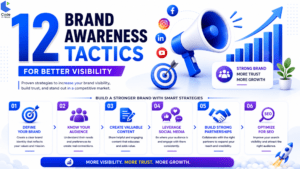
Effective brand awareness is the result of consistent, strategic effort across multiple channels. By implementing these 12 tactics developing a strong identity, leveraging social media, investing in content marketing, optimizing for SEO, collaborating with influencers, using paid ads, hosting events, encouraging user-generated content, building partnerships, utilizing email marketing, focusing on PR, and measuring results businesses can achieve lasting visibility and recognition.
In a competitive marketplace, brand awareness is more than just recognition; it’s the foundation of trust, loyalty, and long-term success. Brands that commit to these strategies will not only stand out but also thrive in the minds and hearts of their audiences. Over time, consistent brand awareness efforts create emotional connections that drive repeat purchases and advocacy. When customers identify with a brand’s values and experiences, they become ambassadors who spread its message organically. This ripple effect strengthens reputation, fuels growth, and ensures sustainability even in changing markets. Ultimately, investing in brand awareness is investing in the future building a legacy that endures beyond trends and continues to inspire confidence, credibility, and customer devotion.