UI UX Design Nepal transforms business websites into SEO powerhouses by prioritizing intuitive interfaces, mobile optimization, and user engagement strategies proven to dominate local search results. Nepal is rapidly emerging as a hub for digital creativity and innovation. Businesses across the country are realizing that a strong online presence is no longer optional—it is essential for growth. From small startups to established enterprises, companies are investing in websites that not only look appealing but also deliver smooth, meaningful user experiences.
In today’s digital marketplace, a website is more than a digital brochure. It is the first impression of a brand, the main point of contact for customers, and often the deciding factor in whether a visitor becomes a buyer. A well-designed interface and a seamless user experience can make the difference between a visitor leaving after a few seconds and a customer completing a purchase.
Code in Nepal is one of the creative forces driving this transformation. The agency provides web design, UI/UX development, and branding services to clients across industries. It focuses on creating websites that combine beauty with functionality—sites that are easy to navigate, fast to load, and aligned with each client’s goals. By blending research, design thinking, and technology, it helps businesses build trust, attract customers, and grow online.
This blog explores how UI UX design in Nepal is helping businesses succeed in the digital world. It looks at the principles, strategies, and real examples that show how thoughtful design can turn a simple website into a powerful business tool.
A well-designed UI/UX is only effective when your business actually has an online presence. If you’re still unsure about building a website, read our guide on Why Your Business in Nepal Needs a Website in 2026 to understand its importance in today’s digital world.
The Growth of UI UX Design in Nepal

Over the past decade, Nepal’s digital industry has grown rapidly. What started as a small community of freelance designers and developers has evolved into a thriving ecosystem of creative agencies, startups, and tech innovators. As internet access expanded and e-commerce gained popularity, businesses began to understand that design directly affects customer trust and engagement.
In the early years, most websites in Nepal were static and basic. They served as online directories rather than interactive platforms. But as competition increased, companies realized that design could influence how customers perceive their brand. A well-designed website could make a small business look professional and reliable, while a poorly designed one could drive potential customers away.
Today, UI UX design in Nepal is about more than visuals. It is about understanding users—how they think, what they need, and how they interact with digital products. Designers now use tools like Figma, Adobe XD, and Sketch to create prototypes and test ideas before development.
Understanding UI UX Design

User Interface (UI) design is a field of study and practice focusing on creating user-friendly and aesthetically pleasing digital interfaces that enable people to interact with technology.
User Experience (UX) focuses on the overall journey a user takes while using a product. It includes how easy it is to navigate, how quickly pages load, and how satisfying the experience feels.
UI and UX work together. A beautiful interface without good usability frustrates users, while a functional but unattractive design fails to capture attention. The best websites balance both, clear visuals and smooth interactions that guide users naturally toward their goals.
Why UI UX Design Matters for Businesses

A business website is often the first place customers interact with a brand. Within seconds, users decide whether to stay or leave. Good design helps businesses make a strong first impression and build trust.
Builds Credibility
A clean and professional website makes people feel safe. In Nepal, users often judge trust quickly because scams and fake pages exist. If a website has clear contact details, a real address, consistent branding, and updated content, users believe the business is legitimate. Even small details, like correct spelling, clear photos, and working links—can increase trust.
Improves Engagement
Engagement means users stay longer and explore more pages. This happens when the website is easy to scan and navigate. Short sections, clear headings, and simple menus help users find what they need without confusion. When users feel “in control,” they keep browsing instead of leaving.
Increases Conversions
Conversions are actions like calling, booking, buying, or sending an inquiry. UI/UX increases conversions by removing friction. For example:
- Fewer steps to contact the business
- Shorter forms
- Clear buttons like “Call Now,” “Get Quote,” or “Book Appointment”
- Trust signals near the action (reviews, guarantees, payment options)
When the next step is obvious, users take it.
Boosts SEO
Search engines want to show websites that people find useful. If a site loads fast, works well on mobile, and keeps users engaged, it performs better in search results. Good UI/UX also improves SEO by using clear page structure, readable content, and easy navigation—so both users and search engines understand the site.
Strengthens Brand Identity
Brand identity is how people remember a business. When a website uses consistent colors, fonts, tone, and image style, it feels organized and professional. Over time, users recognize the business faster and trust it more. A website that looks different on every page feels unreliable.
Reduces Costs
Good UI/UX planning saves money. If the structure is designed properly from the start, it avoids repeated redesigns and constant fixes. A messy website often needs frequent changes because users complain or the business keeps “patching” problems. A well-planned design reduces future development time and support issues.
The Design Process

Research and Discovery
This step is about understanding the business and the users. What does the business want—calls, bookings, sales, or leads? Who are the users—students, tourists, patients, shoppers? What do competitors do better? This helps identify real problems like unclear pricing, weak trust, or confusing navigation.
Information Architecture
Here, the content is organized into a clear structure. Pages and menus are planned so users can quickly find services, pricing, location, FAQs, and contact. A good structure is especially important for mobile users who don’t want to dig through many pages.
Wireframing and Prototyping
Before final design, the layout and user flow are planned. This helps confirm things like: “Can users find the booking button quickly?” or “Is the service page easy to understand?” Fixing problems at this stage is faster and cheaper than fixing them after development.
Visual Design
This is where the website gets its final look. Colors, fonts, spacing, and images are chosen to match the brand and stay readable. The goal is not decoration. The goal is clarity, trust, and a smooth experience.
Usability Testing
Real users try the website. If they struggle to find contact info, misunderstand a button, or get stuck on a form, those issues are fixed. Testing helps remove confusion before launch.
Development and Launch
The website is built and tested across devices and browsers. Forms, buttons, and key pages are checked carefully. A good launch also includes basic performance checks so the site loads well for Nepali mobile users.
Continuous Improvement
After launch, the website is improved using real data. Businesses can track which pages bring leads, where users drop off, and what content gets ignored. Small updates over time can increase conversions without needing a full redesign.
Practical UI UX Design Improvements for Nepali Business Websites

Many business websites in Nepal look fine at first glance but still fail to bring calls, messages, or sales. The reason is simple: the website does not match how people actually behave online. Most users in Nepal are mobile-first, often on slower networks, and want quick answers like price range, location, and contact details. Many prefer calling or messaging instead of filling long forms. Good UI UX design focuses on these real behaviors.
Localized Design
Design that reflects Nepali culture and habits connects better with users. Using Nepali language options, local imagery, and familiar payment methods like eSewa or Khalti builds comfort and trust.
Performance Optimization
Speed matters. Compressing images, using caching, and optimizing content improve load times. A fast website keeps users engaged and improves search rankings.
Emotional Branding
Colors and visuals that reflect Nepali culture—such as warm tones, mountain imagery, or traditional patterns—create emotional connections with users.
Data-Driven Design
Using analytics tools helps identify where users drop off or struggle. Continuous testing and iteration improve performance.
Conversion-Focused Layouts
Strategic placement of calls-to-action, trust badges, and testimonials increases conversions.
How Nepali Businesses Can Apply This

Start with Research
Use real customer questions from calls, Facebook messages, and in-person visits. If people keep asking “price?” or “location?” the website should answer those clearly.
Focus on Mobile
Assume most users are on phones. Make text readable, buttons easy to tap, and key actions visible without too much scrolling.
Simplify Navigation
Keep menus short and clear. Avoid confusing labels. Make “Contact” easy to find on every page.
Use Data
Track what users do. If many users visit a page but don’t contact the business, that page may need clearer CTAs, better trust signals, or simpler content.
Work with Experts
Experienced designers and developers can balance design, speed, accessibility, and SEO. This reduces mistakes and helps the website perform better long-term.
Building Trust Through Design

Trust is the foundation of online success. Users hesitate to share information or make purchases if a website feels unsafe or unprofessional. Trust-building design elements include:
- SSL certificates and visible security icons
- Transparent contact information
- Customer reviews and testimonials
- Consistent branding and tone
- Fast loading and error-free pages
The Economic Impact of UI UX Design in Nepal

UI/UX design contributes to Nepal’s growing digital economy. As more businesses invest in design, they attract international clients, create jobs, and boost exports of digital services. The rise of remote work has also allowed Nepali designers to collaborate globally, bringing new skills and perspectives back home.
Educational institutions are now offering UI UX courses, and design communities are hosting workshops and hackathons. This ecosystem supports innovation and helps Nepal compete in the global digital market.
Common Mistakes in UI UX Design

- Ignoring mobile users
- Overloading pages with content
- Weak navigation
- Inconsistent branding
- Lack of testing
Avoiding these mistakes ensures smoother experiences and better results.
The Connection Between UI UX and SEO

Search engines reward websites that provide great user experiences. Factors like page speed, mobile responsiveness, and low bounce rates directly influence rankings. A well-designed site keeps users engaged longer, signaling quality to search engines.
Good UI/UX also improves accessibility, which aligns with Google’s focus on inclusive design.
The Future Workforce of UI UX Design in Nepal
The next generation of Nepali designers is entering the field with strong technical and creative skills. Many are self-taught through online platforms, while others graduate from design programs. Collaboration between designers, developers, and marketers is becoming standard practice.
As global demand for digital products grows, Nepali designers are finding opportunities to work remotely for international clients, contributing to Nepal’s digital exports.
The Role of UI UX Design in Different Industries

UI UX design impacts every sector differently. In Nepal, several industries are seeing major benefits from improved design.
Tourism and Travel:
Travel agencies and hotels use interactive booking systems, virtual tours, and multilingual support to attract international visitors. A well-designed travel website can increase bookings and build trust with travelers.
Education:
Online learning platforms and schools use intuitive dashboards, progress tracking, and easy navigation to keep students engaged. Clear design helps learners focus on content instead of struggling with the interface.
Healthcare:
Hospitals and clinics benefit from simple appointment booking systems, clear service listings, and accessible contact options. A user-friendly healthcare website builds confidence and saves time for both patients and staff.
E-commerce:
Online stores rely heavily on effective UI/UX design. Features such as quick checkout, intuitive product filters, and mobile optimization have a direct impact on sales and customer satisfaction. A seamless shopping experience not only increases conversions but also encourages customers to return. If you’re planning to sell online, it’s important to build your store the right way—check out our step-by-step guide on How to Start an E-commerce Website in Nepal to get started.
Real Estate:
Property websites with clean layouts, high-quality images, and easy search filters help buyers find what they need faster. Good design also builds trust in high-value transactions.
The Future of UI UX Design in Nepal

The future of UI/UX design in Nepal is full of opportunity. As more businesses go digital, the demand for skilled designers continues to grow. Emerging technologies like artificial intelligence, augmented reality, and voice interfaces are opening new possibilities.
Designers are exploring these innovations to create more personalized and interactive experiences. The goal is to position Nepal as a leader in digital design across South Asia.
Upcoming trends include:
- AI-driven personalization for tailored user experiences
- Minimalist design for clarity and focus
- Microinteractions for engaging feedback
- Sustainable design to reduce digital waste
- Voice and gesture interfaces for accessibility
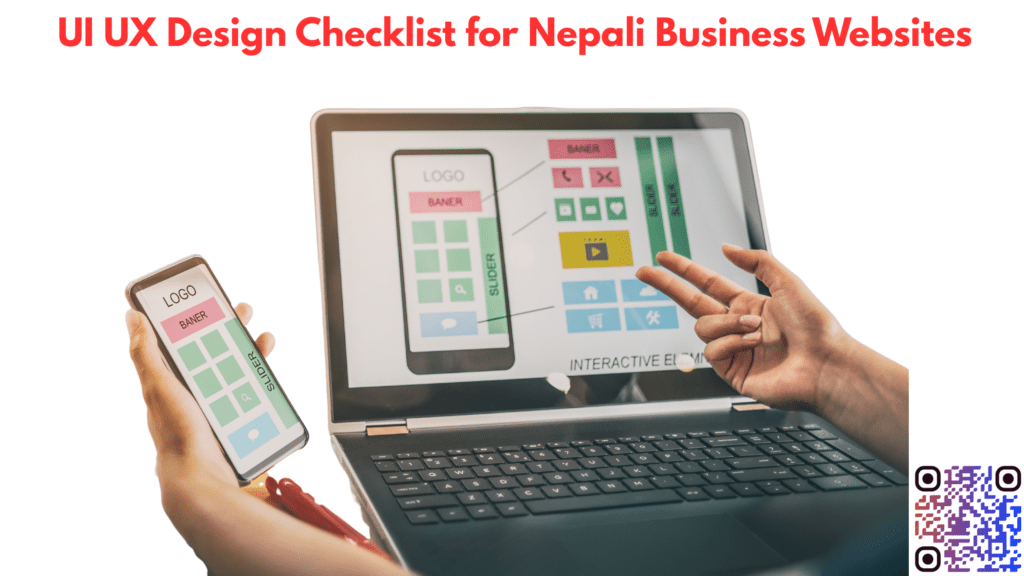
UI UX Design Checklist for Nepali Business Websites
1)Mobile Optimization
Most visitors will come from phones in Kathmandu, Pokhara, Biratnagar, and other cities. Make sure text is readable without zooming, buttons are easy to tap, and important info (price, location, contact) is visible quickly.
2) Clear Navigation
Keep the menu short so users don’t get lost. Use familiar labels like Home, Services, Pricing, About, Contact. If you have many services, group them into 4–6 main categories.
3) Fast Loading Speed
Slow sites lose users, especially on mobile data. Use smaller image sizes, avoid heavy sliders, and keep pages clean. A fast site also improves Google ranking.
4) Visible Contact Options
Many Nepali customers prefer quick contact. Show phone number and location clearly, and add one-tap actions like Call, WhatsApp/Viber, and Email. Put contact options in the header, footer, and contact page.
5) Trust Elements
People want proof before they pay or visit. Add real testimonials, Google/Facebook reviews, photos of your team or office, certifications, and clear business details (PAN/VAT if relevant). This is very important for high-value services like clinics, consultancies, and real estate.
6) Consistent Branding

Use the same colors, fonts, and style across all pages. Consistency makes the business look professional and reliable. If every page looks different, users may feel the site is not maintained.
7) Readable Content
Write in short paragraphs with clear headings. Avoid long blocks of text. Many users scan quickly, so highlight key points like benefits, pricing range, process steps, and FAQs.
8) Strong CTAs (Call-to-Action)
Tell users exactly what to do next: Call Now, Book Appointment, Get Quote, Message Us. Place CTAs near service descriptions and at the end of pages so users don’t have to search.
9) Analytics Tracking
Track what users do so you can improve. Check which pages get visits, where people leave, and which buttons get clicks. Use this data to update weak pages and improve conversions over time.
This checklist helps businesses evaluate their websites and identify areas for improvement.
FAQ: UI UX Design in Nepal

1. What is UI UX design and why is it important for business websites in Nepal?
UI (User Interface) design focuses on how a website looks, including colors, typography, and layout. UX (User Experience) design focuses on how users interact with the website. In Nepal’s growing digital market, good UI/UX helps businesses create professional websites that are easy to use, which increases customer trust, engagement, and conversions.
2. How does good UI UX design help Nepali businesses grow online?
Good UI/UX design improves website navigation, page speed, and usability. When visitors can easily find information or complete actions like purchasing a product or contacting the company, businesses experience higher conversion rates and stronger online presence.
3. What are the key elements of a successful UI/UX website design?
A successful website design usually includes:
- Simple and intuitive navigation
- Mobile-friendly responsive design
- Fast loading speed
- Clear call-to-action buttons
- Consistent branding and visuals
- User-focused layout and content structure
4. Why is mobile-friendly design important for websites in Nepal?
A large percentage of internet users in Nepal access websites through smartphones. Mobile-friendly UI/UX design ensures the website works smoothly on all screen sizes, improving user satisfaction and search engine rankings.
5. How does UI UX design impact SEO and website traffic?
Search engines like Google prioritize websites that provide a good user experience. Fast loading pages, clear structure, and mobile optimization help websites rank higher in search results, bringing more organic traffic.
6. What industries in Nepal benefit the most from professional UI UX design?
Almost every industry benefits from UI UX design improvements, but it is especially important for:
- E-commerce businesses
- Hotels and tourism companies
- Restaurants and food delivery services
- IT and software companies
Conclusion
In the digital era, success depends on how well a business connects with its audience online. A well-designed website builds trust, improves engagement, and drives growth.
UI UX design is not just about making things look good—it’s about creating experiences that work. By combining creativity, research, and technology, businesses in Nepal can thrive online and compete globally.
As Nepal’s digital landscape evolves, companies that invest in thoughtful design will stand out, attract more customers, and achieve lasting success. Code in Nepal continues to lead this movement, helping brands transform their online presence through smart, user-centered design.